
Water plays a bigger role in household comfort than most people realize. It runs through the kitchen tap, feeds the washing machine, fills the bathtub, and keeps everyday routines moving. When something isn’t quite right, the signs tend to appear gradually: cloudy glassware, chalky marks around faucets, soap that barely lathers, or drinking water with an unpleasant taste.
These problems can be irritating, but they don’t all have the same cause. Some are related to hard water, while others involve substances that require a different treatment approach. The trick is to understand what you’re dealing with before spending money on equipment.
With a little information and the right system, homeowners can make practical improvements to water quality without turning the process into a complicated project.
Understanding Water Purity and Softening
Water treatment isn’t simply about making water look clear. Water can appear perfectly clean while containing dissolved minerals or other substances that aren’t visible to the naked eye. That’s why testing is often the best starting point when you’re considering a treatment system.
The idea behind water purity & softening brings together two related but distinct goals. Water purification generally refers to treatment intended to reduce particular contaminants, while softening specifically targets hardness minerals, mainly calcium and magnesium. One process doesn’t automatically accomplish the other.
Hard water often leaves mineral deposits on showerheads, taps, kettles, and glassware. It can make cleaning more time-consuming and may contribute to scale inside some water-using appliances. A suitable softener reduces hardness and can help minimize these everyday frustrations.
Filtration, meanwhile, depends on the technology being used. Activated carbon can improve certain taste and odor concerns, while reverse osmosis can reduce a range of dissolved substances. Other treatment methods are designed for specific contaminants or microorganisms.
Choosing between these options becomes much easier once you know which water quality issues actually affect your home.
Why Hard Water Can Be a Household Headache
Hard water isn’t usually an immediate health concern, but it can make ordinary household tasks more troublesome. Mineral residue may collect around sink fixtures, shower doors, and plumbing fittings. Soap can react with hardness minerals, leaving deposits that require extra scrubbing.
Over time, scale may also affect the performance of certain appliances, particularly equipment that heats water. The impact varies with water hardness, temperature, usage, and appliance design, so not every home will experience the same problems.
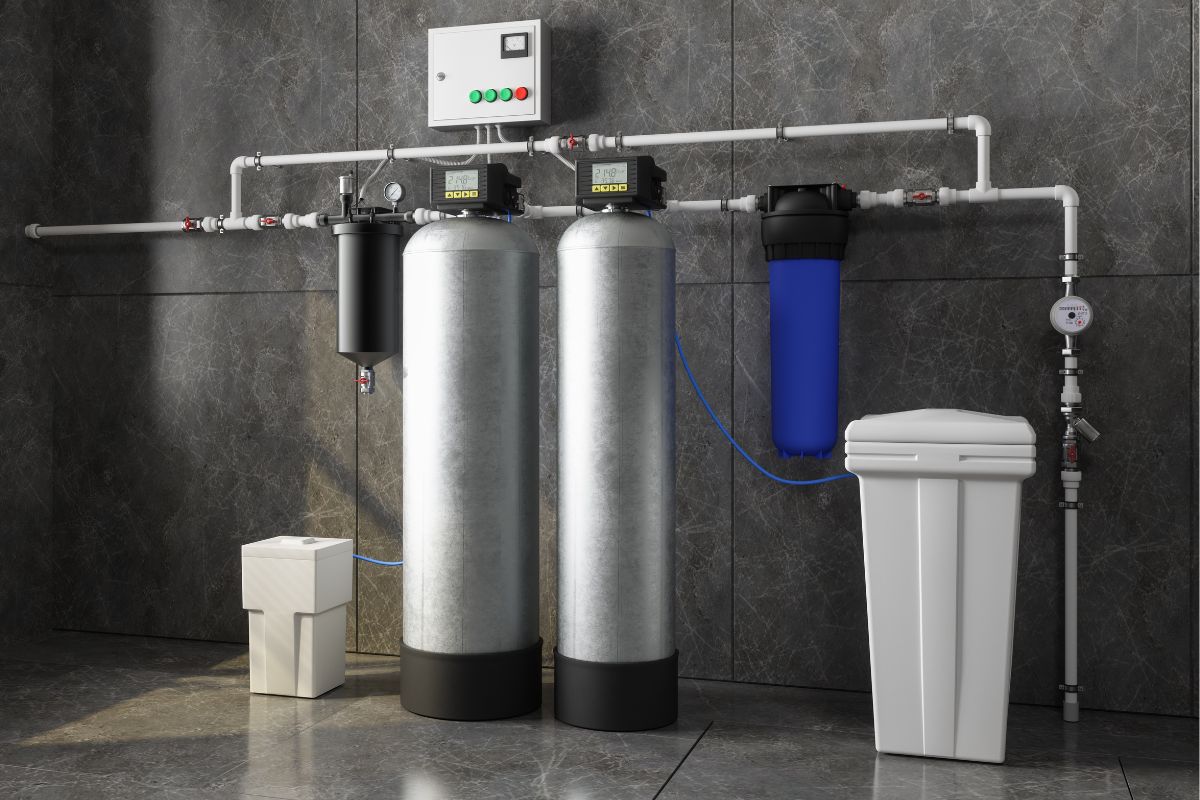
Water softeners commonly use an ion-exchange process. Inside the system, a resin exchanges hardness minerals for sodium or potassium ions. Many conventional units periodically regenerate to restore the resin’s capacity, which means they need suitable settings and routine maintenance.
Softening does have trade-offs. Some systems use salt and discharge regeneration water, and softened water contains more sodium or potassium than the incoming supply. Households with specific dietary or plumbing considerations should discuss their needs with a qualified professional before choosing a system.
A water test can confirm whether hardness is significant enough to justify treatment. That way, you’re not buying equipment simply because a neighbor has it or because an advertisement promises spotless dishes.
What High-Efficiency Water Softeners Offer
Homeowners often want equipment that works reliably without requiring constant attention. Modern high-efficiency water softeners may use metered regeneration, demand-based controls, or other features to adjust operation according to water use and system capacity.
Instead of regenerating on a fixed schedule regardless of demand, a metered unit can base regeneration on the amount of water used. When properly sized and configured, this approach may reduce unnecessary regeneration and help manage salt and water consumption.
However, efficiency depends on more than the product label. Correct sizing, incoming water hardness, household demand, settings, and maintenance all influence performance. An undersized unit may struggle during busy periods, while an oversized system can add unnecessary expense.
When comparing softeners, ask how the model determines when to regenerate, how much salt it typically uses under your conditions, and what routine service is required. Look for clear documentation rather than relying on broad efficiency claims.
It’s also worth considering the location of the installation. The unit needs enough space for servicing, access to appropriate drainage, and a suitable connection to the home’s plumbing. A good installation plan helps avoid problems later.
When Whole-Home Filtration Makes Sense
A drinking-water filter at the kitchen sink can be useful, but it only treats water passing through that particular connection. If a household wants to address a specific issue at several taps, a larger treatment arrangement may be more suitable.
Whole-home filtration systems are generally installed where water enters the property, allowing treated water to reach multiple fixtures. Depending on the equipment, they may target sediment, chlorine taste and odor, or other substances for which the system is specifically designed.
These systems can be helpful when the treatment goal applies to bathing, laundry, and other household uses—not just drinking water. However, a whole-home filter isn’t automatically necessary, and not every model removes the same substances.
For example, a sediment filter can capture particles but won’t necessarily remove dissolved chemicals. A carbon filter may improve certain taste and odor concerns, but it isn’t a universal solution for bacteria or every dissolved contaminant. Specialized problems may require a different treatment process or a combination of technologies.
Before installation, confirm what the system is designed to reduce and whether independent certification supports the relevant performance claims. Also consider flow rate: the system should supply enough treated water when several taps or appliances operate at once.
Testing Helps You Avoid Guesswork
Water quality varies according to the source, location, and plumbing. Municipal water customers can review their supplier’s published reports, while households using private wells should follow local public health recommendations for routine testing.
Depending on the situation, testing may examine hardness, pH, iron, nitrate, bacteria, or other substances. The correct test panel depends on the water source and the concern being investigated.
If your water suddenly develops a strange taste, odor, or color, don’t assume a new filter will solve it. Contact your water supplier or local public health authority if contamination may be involved. Some water quality concerns cannot be identified by sight or smell alone.
Once you have reliable results, a qualified water treatment provider can explain which technologies are appropriate and what their limitations are. This is also the time to compare installation costs, maintenance schedules, replacement parts, and ongoing operating expenses.
Maintenance Keeps the System Working
Even a good treatment system needs regular care. Softener resin requires appropriate regeneration, filters eventually need replacement, and some equipment needs periodic inspection or cleaning. Neglecting maintenance can reduce performance and lead to avoidable problems.
Follow the manufacturer’s instructions and keep a record of service dates. Pay attention to changes in water pressure, taste, odor, or scale buildup, since these may signal that an inspection is needed. If the system is intended to reduce a particular contaminant, follow the recommended testing and verification schedule.
Don’t overlook the plumbing around the equipment, either. Leaks, damaged connections, and poorly maintained storage tanks can create issues that treatment alone won’t resolve.
Choose Water Treatment That Fits Your Home
Better water doesn’t necessarily require the most expensive equipment or a system packed with advanced features. It starts with understanding your water, identifying the issues that matter, and choosing technology that addresses them.
For some homes, a softener may be the most useful improvement. Others may benefit from a drinking-water filter or a whole-home system designed for a specific concern. In some cases, several treatment stages may be necessary.
Take the time to test, compare, and ask questions. When the equipment is properly selected, correctly installed, and maintained, water treatment can make everyday routines easier and help you feel more confident about the water moving through your home.