Employers looking for a competitive edge to recruiting top talent are turning towards competency based recruitment and headhunting methodologies.
Recruiters base their decisions on various factors such as a candidate’s skills, experience, and professional demeanor. However, competencies, a candidates attributes, behaviors, and skills driving success, are equally critical. While experience and technical expertise are straightforward to evaluate, identifying core competencies involves greater skill and practice.
Traditional recruitment methods frequently overlook these vital traits, leaving organizations vulnerable to mismatches in talent acquisition.
By integrating Competency-Based Interviews (CBI) and psychometric assessments into recruitment strategies, recruitment teams can identify these essential qualities, ensuring that each candidate is not only qualified on paper but also aligned with the demands and culture of the role.
What Are Competency Based Interviews?
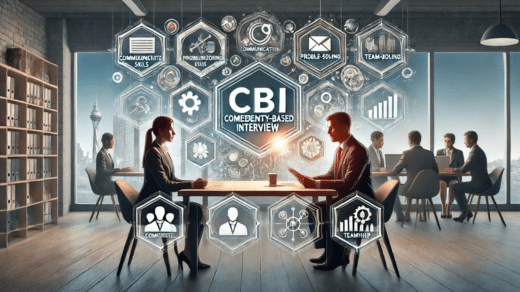
Competency Based Interviews (CBI) is a structured interview process where recruiters focus on identifying specific skills, behaviors, and qualities the business requires to meet its goals. These interviews reveal the candidate’s abilities by showcasing their competencies in previous roles, offering insights into their capability to tackle similar challenges in the future.
Unlike traditional interviews that emphasize candidates’ general qualifications or hypothetical scenarios, competency-based interviews delve into real-life examples.
CBIs are especially valuable for assessing hard skills, like technical expertise and soft skills, like communication, teamwork, and problem-solving. They assist recruiters learn about a candidates non-quantifiable skills.
By exploring a candidate’s past experiences, employers gain a deeper understanding of their performance under pressure, ability to adapt to new situations, and contribution to team success.
An interview’s purpose is not to capture a candidate’s superficial snapshot, instead it must reveal their hidden story. Any organization failing to do this, plans to lose the talent search.
Improving Your Interview Process with a Competency-Based Approach
An efficient recruiter will utilize a structured methodology that goes beyond a candidate’s surface level qualifications. Competency-based interviews (CBI) offer recruiters and Human Resources personnel a strong framework for uncovering real-world behaviors, while tools like psychometric assessments and headhunting methodologies complement the process by identifying top talent.
Here’s how to enhance the interview process with a competency based approach.
1. Structure the Interview Process
A structured and balanced interview process ensures consistency, reduces bias, and provides actionable insights into a candidate’s capabilities. Focus on behavioral questions that show candidates’ competencies in previous roles instead of hypothetical ones.
· Begin by identifying the competencies essential for success in the position. For instance, a customer support representative may need competencies like “client focus” or “problem-solving.”
· Behavioral questions like “Can you tell me about a time when you resolved a customer complaint effectively?” provide concrete examples of past performance.
· Incorporate psychometric assessments to complement CBI, offering additional insights into a candidate’s personality traits and cognitive abilities. 2. Evaluate Soft and Hard Skills
Competency-based recruitment excels at assessing technical expertise and interpersonal abilities, ensuring the candidates holistic evaluation.
Evaluating Hard Skills
HR personnel can use CBIs to gauge technical knowledge and proficiency by asking about specific challenges the candidate faced in previous roles. For example: “Describe a project where you had to implement new software. What steps did you take to ensure its success?”
Evaluating Soft Skills
Recruiters find soft skills like communication, teamwork, and adaptability more difficult to measure but are vital for long-term success.
Questions like “Can you share a time when you worked with a team to overcome a major challenge?” reveal valuable insights into a candidate’s collaborative abilities.
These tools measure traits like emotional intelligence, leadership potential, and problem-solving aptitude, ensuring candidates meet technical and cultural requirements.
3. Focus on Behavioral Evidence over Hypotheticals
Structured Competency-based interviews cement the recruitment process in by emphasizing past behaviors over theoretical scenarios. Hypothetical questions may test a candidate’s reasoning but fail to provide a reliable picture of their job performance.
As a recruiter, instead of asking, “What would you do if a client disagreed with your solution?”
You could ask, “Can you tell me about a time when a client disagreed with your solution, and how you handled it?”
Research supports this approach, showing that behavioral questions consistently outperform situational ones in identifying successful candidates. It links directly to the competencies a role requires, ensuring that recruiters assess candidates based on their ability to perform critical on-the-job behaviors.
Additional Tips for Competency Based Interviews
Recruiters can maximize their Competency-based recruitment process by incorporating the following additional hints;
Prepare Probing Follow-Up Questions
After the initial question, use structured follow-ups to encourage deeper responses and uncover insights beyond rehearsed answers. For example, ask “What was the outcome of your actions?” or “How did you address any challenges you encountered?”
Involve Diverse Perspectives
Include at least two colleagues in the interview process—one in a similar role to understand technical alignment and another from a different role who interacts with the position being filled. This ensures a balanced evaluation of the candidate’s fit within the team and organization.
Standardize Scoring with Weighted Competencies
Use a consistent scoring mechanism, such as a 1–5 scale, for all interview questions. Assign greater weight to the most critical competencies to prioritize key skills and behaviors.
Minimize Small Talk
While friendliness can help candidates relax, avoid excessive informal conversation. Unstructured discussions may reveal personal details that could lead to unconscious bias.
Delay Evaluator Discussions
Refrain from discussing candidates with other interviewers until recruiters have completed and scored all interviews. It helps maintain objectivity and ensures each evaluator’s assessment remains unbiased.
Conclusion
Incorporating competency based interviews with headhunting methodologies, psychometric assessments, and structured recruitment strategies is revolutionizing the way organizations identify and secure top talent. By prioritizing past performance and real-world behaviors, this all-encompassing interviewing approach ensures that businesses select proficient candidates who are also aligned with organizational values and goals.
Procapita Talent, a division of the Procapita Group specializing in business consulting across the GCC, brings cutting-edge solutions to workforce development.
By partnering with Procapita Talent, businesses gain access to transformative recruitment strategies that not only fill roles but build high-performing, sustainable teams. To learn more, visit Procapita Talent.