What Real HVAC Experience Teaches You (That Brochures Never Will)
There’s a certain kind of confidence you get when you walk into a space and everything just feels right. The air isn’t too cold, not too warm — it’s just comfortable in a way you don’t even think about. Offices where people stay focused, factories where machines run smoothly, warehouses that don’t feel like ovens by midday.
But here’s the thing… that kind of comfort doesn’t happen by accident.
Behind it, there’s always a story. A problem that needed solving, a system that had to be designed carefully, a team that had to figure things out along the way. And if you really want to understand HVAC, you don’t just look at equipment — you look at those stories.
Why Real Projects Tell You More Than Specifications
It’s easy to get caught up in technical details. Tonnage, efficiency ratings, airflow numbers — they all matter, sure. But they don’t tell you how a system performs in the real world.
That’s where hvac job case studies become surprisingly useful. They show what actually happened on-site — what worked, what didn’t, what had to be adjusted halfway through.
I remember reading about a project where a commercial building kept experiencing uneven cooling, despite having a high-end system installed. The issue wasn’t the unit itself — it was how airflow interacted with the building’s layout. Once that was reworked, everything changed.
And that’s the thing. Real-world examples remind you that HVAC isn’t just technical — it’s practical.
Industrial Spaces Play by Different Rules
If residential HVAC is about comfort, industrial environments are about control.
Factories, warehouses, production units — these spaces don’t just need cooling, they need consistency. Machines generate heat. Processes depend on stable temperatures. And sometimes, even a slight variation can cause problems.
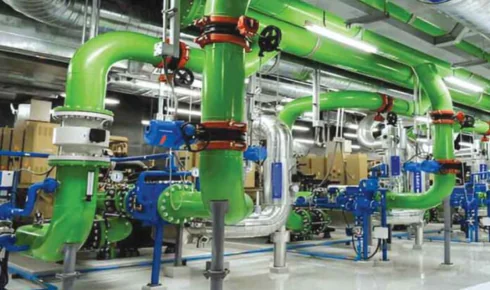
That’s where industrial comfort systems come into the picture. They’re not designed for occasional use or mild conditions. They’re built to handle continuous operation, heavy loads, and changing demands throughout the day.
I once visited a facility where cooling wasn’t just about worker comfort — it was about keeping equipment from overheating. The system had to run almost constantly, adjusting in real time as conditions changed.
It gave me a new perspective. In these environments, HVAC isn’t a background feature — it’s part of the operation itself.
The Hidden Complexity of Large Cooling Projects
On the surface, cooling a large building might seem like a scaled-up version of cooling a home. Bigger units, more ducts, more power. But it’s rarely that simple.
Large cooling system projects involve layers of planning. Zoning, load balancing, redundancy, energy efficiency — all working together to create a stable environment.
And then there are the variables you can’t fully predict. Occupancy changes, seasonal shifts, unexpected heat sources. A system might be designed perfectly on paper, but once it’s in use, adjustments are almost always needed.
That’s not a flaw — it’s part of the process.
I’ve seen projects where minor tweaks after installation made a huge difference. Adjusting airflow here, recalibrating settings there — small changes that brought everything into balance.
Why Adaptability Matters More Than Perfection
There’s no such thing as a flawless HVAC plan. Even the best designs need flexibility.
Buildings evolve. Usage patterns change. What worked perfectly on day one might need refinement a few months later.
The difference between a good system and a great one often comes down to how well it adapts.
I’ve noticed that the best teams don’t just install and leave. They observe. They adjust. They stay involved long enough to see how the system performs in real conditions.
And that ongoing attention makes a noticeable difference.
The Human Side of HVAC Work
It’s easy to think of HVAC as purely mechanical — machines, ducts, controls. But at the end of the day, it’s about people.
How comfortable employees feel in an office. How customers experience a retail space. How workers manage long hours in a factory.
Temperature affects mood, focus, even productivity. It’s not always obvious, but it’s there.
I’ve walked into spaces where the air felt perfectly balanced — and others where something felt off, even if I couldn’t immediately explain why.
That’s the subtle impact of a well-designed system. It shapes the experience without drawing attention to itself.
What to Look for When Evaluating HVAC Work
If you’re trying to understand the quality of HVAC work, it helps to look beyond the surface.
Don’t just ask what systems are installed. Ask how challenges were handled. Look at the variety of projects. Notice how solutions were tailored to different environments.
Because in the end, it’s not about the equipment alone. It’s about how that equipment is used, adjusted, and integrated into the space.
And those details don’t always show up in specifications — they show up in real-world results.
Bringing It All Together
HVAC systems are easy to overlook when they’re working well. They don’t demand attention. They don’t stand out.
But that quiet performance is the result of thoughtful planning, real experience, and a willingness to adapt.
It’s not about getting everything perfect from the start. It’s about understanding the space, responding to its needs, and making adjustments along the way.
Because comfort, especially in larger or more complex environments, isn’t something you install once and forget.
It’s something you refine.
And when it’s done right, you don’t notice the system at all. You just notice that everything feels… right.